
Industrialisation, Value Chains, and Jobs: Advancing Africa’s Economic Transformation
Industrialisation is critical to Africa’s economic transformation. Strengthening local value addition, building resilient regional value chains, and creating decent jobs are essential to expanding productive capacities and ensuring that African countries capture greater value from their resources. Achieving these ambitions also requires sustainable public financing and responsible debt management to ensure that investments in industrial development translate into lasting economic and social benefits.
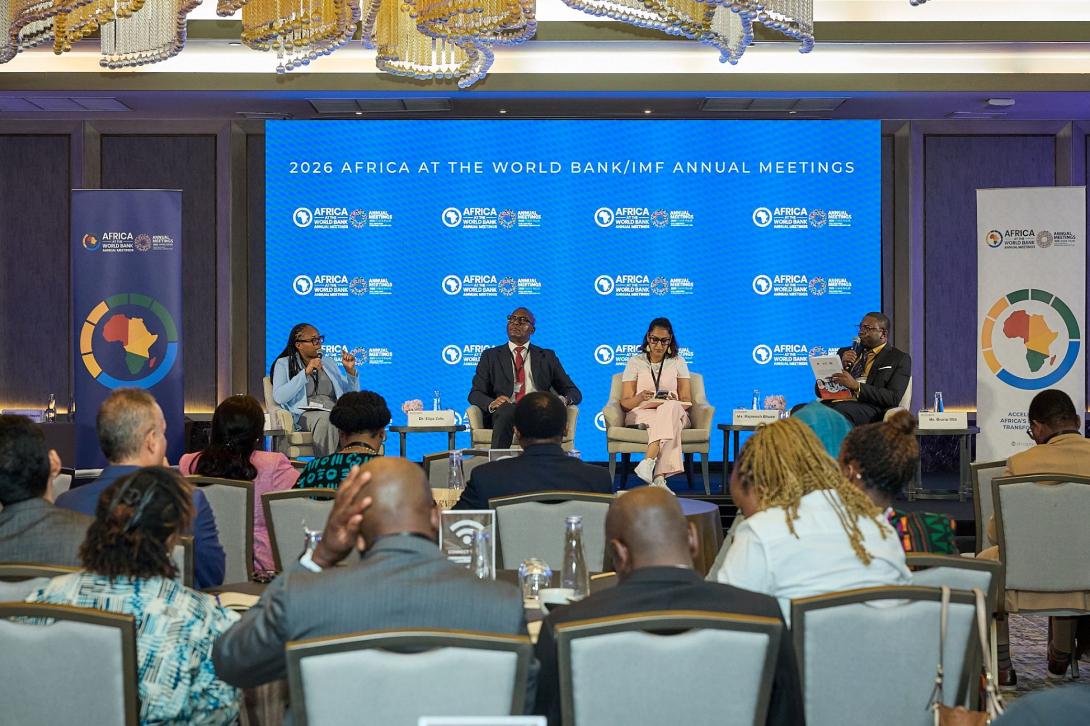
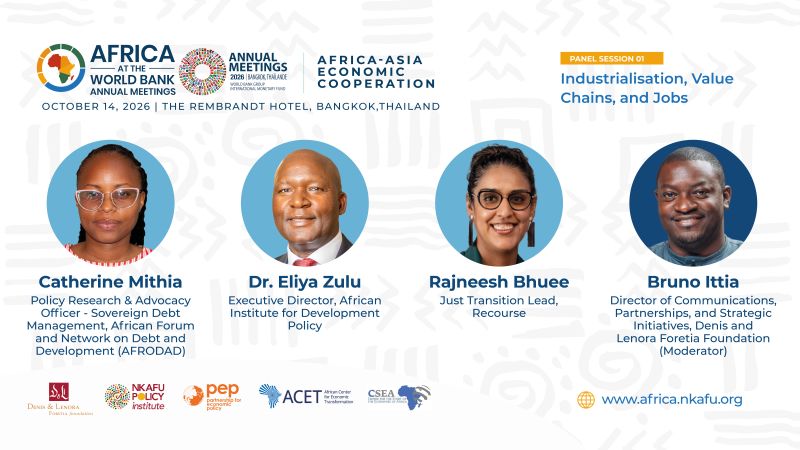
These issues were at the centre of the first panel, “Industrialisation, Value Chains, and Jobs,” held on 14 October 2026 during the World Bank Annual Meetings in Bangkok, Thailand. The panel featured Catherine Mithia, Policy Research and Advocacy Officer for Sovereign Debt Management at the African Forum and Network on Debt and Development (AFRODAD); Dr. Eliya Zulu, Executive Director of the African Institute for Development Policy; and Rajneesh Bhuee, Just Transition Lead at Recourse. The discussion was moderated by Bruno Ittia, Director of Communications, Partnerships and Strategic Initiatives at the Denis & Lenora Foretia Foundation.
The conversation explored how industrialisation can strengthen linkages across productive sectors, promote local value creation, reinforce regional value chains, and expand opportunities for decent and productive employment.
For AFRODAD, advancing Africa’s industrialisation agenda must go hand in hand with sustainable public financing, debt sustainability, and greater fiscal space for development. African countries need financing frameworks that enable governments to invest in productive sectors, infrastructure, skills development, and essential public services without accumulating unsustainable debt burdens or compromising long-term development priorities.
Sustainable public financing is therefore central to building Africa’s productive capacities, strengthening economic resilience, and ensuring that the benefits of industrialisation translate into inclusive growth, decent employment, and improved livelihoods.
The discussions underscored the importance of evidence-informed policies, responsible financing, and reforms that support a more competitive, resilient, and inclusive African economy.