
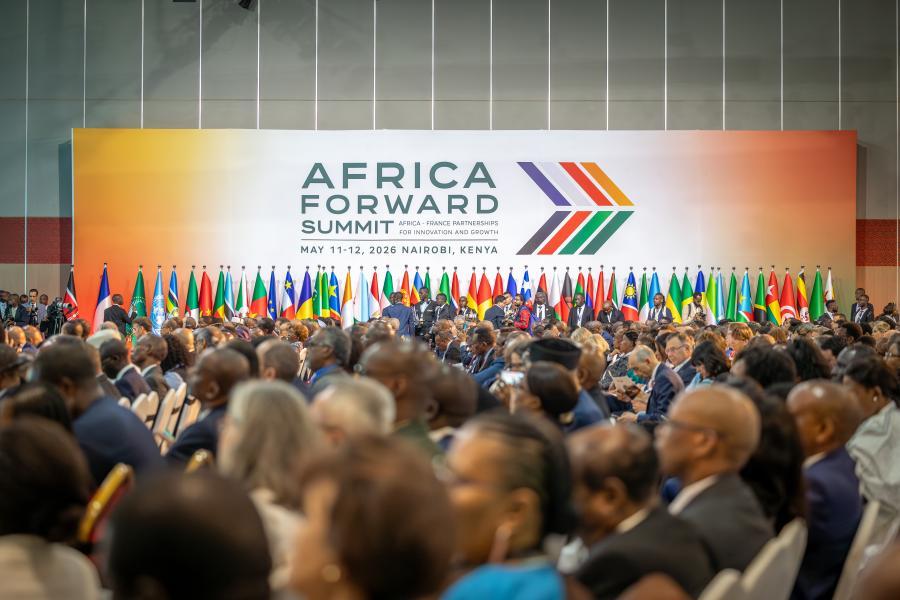
Reimagining Africa’s Development at the Africa Forward Summit 2026
The Africa Forward Summit 2026, convened in Nairobi, Kenya on the 11th and 12th of May represented more than just another high-level diplomatic gathering between Africa and France. It reflected a growing shift in how African leaders are redefining the continent’s place within the global economic order from a recipient of aid to a strategic investment destination and equal development partner. Bringing together Heads of State, development finance institutions, private sector leaders, civil society actors, and multilateral organisations, the summit centered its conversations on one urgent question: how can Africa finance and drive its own transformation in an increasingly uncertain global economy? From green industrialisation and energy transition to artificial intelligence, debt reform, and youth-driven innovation, the summit signaled a continent increasingly determined to shape its future on its own terms.
One of the strongest themes emerging from the summit was the demand for reform of the global financial architecture, an issue that sits at the core of AFRODAD’s advocacy work. African leaders challenged the structural inequalities embedded within international finance systems that continue to make borrowing more expensive for African countries despite the continent’s vast economic potential and investment opportunities. Discussions around the so-called “narrative premium” highlighted how outdated risk perceptions, unfair credit rating systems, and restrictive financing conditions continue to limit Africa’s fiscal space and development ambitions. The calls for debt restructuring mechanisms, affordable climate financing, stronger guarantee frameworks, and greater African representation within institutions such as the IMF and World Bank directly reinforce AFRODAD’s long-standing position that Africa cannot achieve sustainable development while operating within a deeply unequal global financial system. The summit therefore amplified the urgency of building a fairer international financing framework that prioritises development, resilience, and economic sovereignty for African nations.
Equally important was the summit’s emphasis on green industrialisation as a pathway toward both economic transformation and climate resilience. Rather than framing climate action purely in terms of emissions reduction, African leaders advocated for a development-centered energy transition capable of powering industries, creating jobs, and expanding value addition across the continent. Discussions focused heavily on renewable energy investments, sustainable agriculture, resilient infrastructure, and locally driven manufacturing systems that can unlock long-term growth. This vision closely aligns with AFRODAD’s broader calls for development models that place communities, sustainability, and economic justice at the center of policymaking. Conversations also acknowledged that Africa’s natural resources and green minerals should not simply feed external markets but instead support domestic industrial growth and inclusive prosperity under Agenda 2063 and the African Continental Free Trade Area (AfCFTA).
The summit further underscored the growing importance of technology, innovation, and youth participation in shaping Africa’s future. Conversations around artificial intelligence, digital infrastructure, startup ecosystems, and innovation financing highlighted the continent’s ambition to leapfrog traditional development barriers through technology-driven solutions. At the same time, there was strong recognition that Africa’s demographic advantage can only become meaningful if supported by deliberate investments in youth employment, entrepreneurship, education, and small and medium enterprises. For us at AFRODAD, these discussions are particularly significant because economic justice cannot be separated from social inclusion. The future of Africa’s development will depend not only on macroeconomic reforms, but also on whether ordinary citizens, especially young people and women, are meaningfully integrated into economic systems and decision-making processes.
Perhaps most significantly, the Africa Forward Summit 2026 reflected a broader political and ideological shift across the continent: a growing insistence that Africa must engage the world through partnerships rooted in mutual respect, shared prosperity, and African agency. The summit repeatedly moved away from the language of dependency and charity, instead emphasising co-investment, co-creation, and shared accountability. In many ways, this mirrors our Pan-African vision, as AFRODAD, of a continent capable of financing its development priorities, strengthening democratic governance, and asserting its voice within global economic governance spaces. As Africa continues to confront debt vulnerabilities, climate shocks, inequality, and geopolitical competition, the summit served as both a reflection of the continent’s challenges and a statement of its ambitions. One that places dignity, equity, and transformative development at the center of Africa’s engagement with the world.