
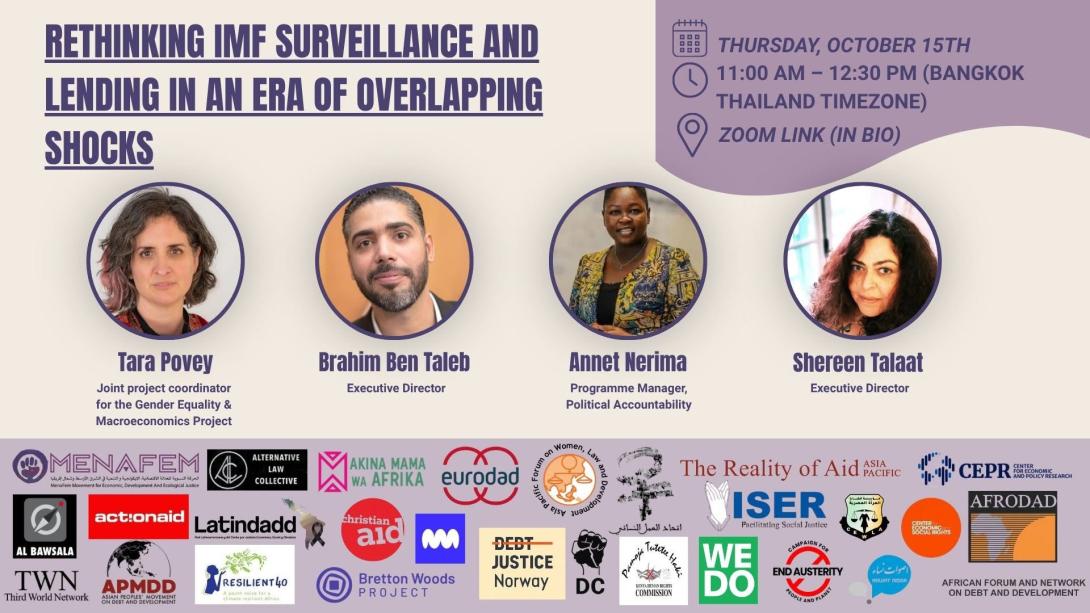
Rethinking IMF Surveillance and Lending in an Era of Overlapping Shocks
AFRODAD joins civil society organisations at the 2026 IMF–World Bank Annual Meetings in Bangkok, Thailand, to examine the implications of International Monetary Fund (IMF) surveillance and lending policies amid overlapping global economic and development crises.
Taking place on Thursday, 15 October 2026, during the Civil Society Policy Forum (CSPF), the discussion, “Rethinking IMF Surveillance and Lending in an Era of Overlapping Shocks,” provides an opportunity to interrogate how IMF policy advice, economic surveillance and lending frameworks influence countries’ policy choices, fiscal space and capacity to respond to interconnected crises.
For African countries, these questions are particularly urgent. Persistent debt vulnerabilities, high debt-servicing costs, climate-related shocks, external economic pressures and substantial development financing needs continue to constrain governments’ ability to invest in essential public services and advance their development priorities. In this context, the design and implementation of IMF-supported policies have significant implications for fiscal sovereignty, public expenditure and economic transformation.
AFRODAD’s participation in these discussions reflects its longstanding commitment to debt justice, responsible lending and borrowing, and reforms to the global financial architecture that enable African countries to pursue sustainable and equitable development.
From AFRODAD’s perspective, addressing debt vulnerabilities requires approaches that go beyond narrow assessments of fiscal balances and repayment capacity. Debt sustainability must also account for countries’ development needs, human rights obligations and capacity to deliver essential services. Similarly, IMF surveillance and lending arrangements should support policies that expand fiscal space, strengthen economic resilience and protect public investment, particularly during periods of overlapping shocks.
A more equitable international financial system must also address the structural constraints that limit African countries’ development financing options. This includes advancing fairer global economic governance, strengthening domestic resource mobilisation, tackling illicit financial flows, and ensuring international financial institutions respond to the priorities and circumstances of borrowing countries.
The Civil Society Policy Forum discussion offers an important platform for civil society to engage with these questions and advocate reforms that put people and development at the centre of global economic policymaking.
AFRODAD and partners call for IMF surveillance and lending frameworks that promote sustainable development, preserve essential public spending and strengthen countries’ capacity to respond to crises without compromising their long-term development objectives. Rethinking these frameworks is an important step towards a global financial architecture that is fairer, more accountable and responsive to the needs of African countries and their people.