
Date
08 October 2026
PRESS BRIEFING NOTE: Financing Africa’s Future: AFRODAD Welcomes Launch of Africa Credit Rating Agency
Date: 8 October 2026 Time: 10:00 – 11:30 AM EAT
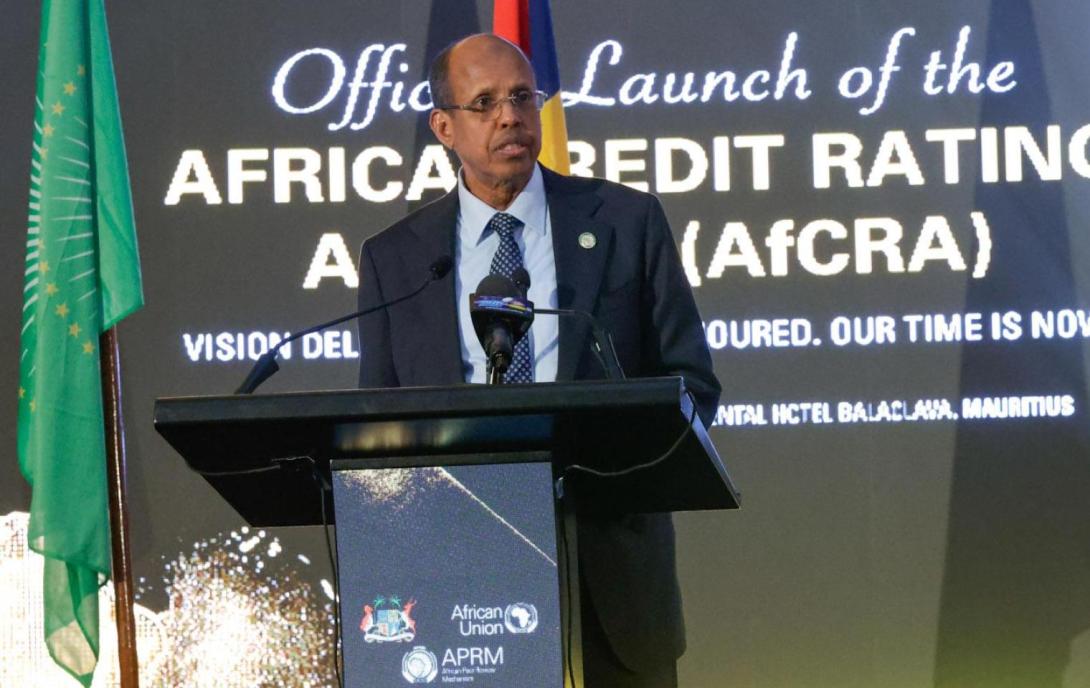
Nairobi, Kenya | 7 October 2026 — The Africa Credit Rating Agency (AfCRA) officially launches today in Mauritius, following years of policy development, technical work and consultations led by the African Peer Review Mechanism (APRM). The agency is intended to complement, rather than replace, existing global credit rating agencies by providing independent, transparent and locally informed assessments of African economies.
Following years of policy development, technical work and consultations led by the African Peer Review Mechanism (APRM), AfCRA is intended to complement, rather than replace, existing global credit rating agencies by providing independent, transparent and locally informed assessments of African economies. “AFRODAD welcomes the launch of the Africa Credit Rating Agency (AfCRA) as an important step towards strengthening Africa’s financial sovereignty and addressing structural inequalities in the global financial system. However, AfCRA’s credibility will depend on its independence, transparent methodologies, technical rigour, strong governance and protection from political interference. It must provide ratings that are trusted because they are rigorous, not simply because they are African,” said Janet Zhou, Executive Director of AFRODAD.
Why AfCRA Matters
Africa faces a profound development financing challenge. The continent’s public debt is estimated at US$2.14 trillion, around 60% of GDP, while debt-servicing costs are expected to reach approximately US$90 billion in 2026. African countries also face significantly higher costs when accessing international capital than countries in other regions.
AFRODAD’s research on credit rating agencies and the global financial architecture has consistently highlighted the role of sovereign credit ratings in shaping Africa’s access to private finance. Its analysis has documented concerns around unfair downgrades, fear-driven fiscal responses and the influence of Moody’s, S&P Global Ratings and Fitch Ratings on African governments’ access to capital.
Credit ratings influence investor perceptions of sovereign risk and, consequently, the cost at which governments borrow. Higher perceived risk can translate into higher interest rates, increased debt-service burdens and reduced fiscal space for development, creating a cycle that can further constrain economic and social progress. The consequences are ultimately borne by citizens, as scarce public resources are diverted from health, education, infrastructure, social protection, industrialisation and sustainable development towards costly debt repayments. “Africa cannot achieve sustainable development when the cost of financing development itself is structurally prohibitive. The question is not simply how much Africa borrows, but also how African economies are assessed and priced in global capital markets,” said Dr. Yungong Theophilus Jong, Manager – Policy Advocacy and Research at AFRODAD.
An African response to an unequal system
AFRODAD welcomes AfCRA as an important step towards ensuring that African economies have a stronger voice in the systems that determine how their economies are assessed, priced and financed. A credible African rating agency could:
- Provide an independent benchmark against existing global ratings;
- Improve the quality and availability of information on African economies;
- Strengthen investor confidence and transparency;
- Support deeper domestic and regional capital markets;
- Help address excessive risk premiums and borrowing costs; and
- Strengthen Africa’s voice in the global financial architecture.
Advancing Agenda 2063 and Africa’s Financial Sovereignty
AfCRA also advances the vision of the African Union’s Agenda 2063: The Africa We Want, Africa’s long-term framework for inclusive and sustainable development, continental integration and greater African agency. Goal 9 of Agenda 2063 calls for the establishment and functioning of continental financial and monetary institutions, while Goal 20 calls for Africa to take full responsibility for financing its development. AfCRA contributes to this wider ambition by strengthening Africa’s capacity to assess, mobilise and access finance on terms that better reflect the continent’s economic realities. This is critical to financing Agenda 2063’s ambitions for infrastructure, industrialisation, regional integration, climate resilience, decent employment and improved public services. These priorities require affordable, predictable and sustainable long-term financing.
Building on Africa’s Debt and Financing Agenda
For AFRODAD, AfCRA is not an isolated initiative. It forms part of a longstanding African and civil society agenda to strengthen Africa’s agency over how the continent borrows, how debt is governed and how African economies are assessed and financed.
The African Borrowing Charter establishes principles for responsible and sustainable borrowing, including transparency, accountability, parliamentary oversight, citizen participation and borrowing that supports inclusive development.
The Harare Declaration calls for reform of the global debt architecture, including reforms to debt sustainability frameworks and credit-rating systems, and advances the principle of making Africa a “rule maker, not a rule taker.”
The Common African Position on Debt (CAP) builds on this agenda by articulating Africa’s collective response to the structural drivers of the continent’s debt crisis and calling for reforms to the international debt architecture, alongside stronger African financing systems.
AfCRA is therefore an important institutional opportunity within this wider agenda: to ensure that African economies have a credible African voice in the systems that assess risk, determine access to capital and influence the cost of financing development.
AFRODAD Advocacy and Research Evidence
AFRODAD’s position on credit-rating reform and the need for an African rating institution is grounded in years of research, policy advocacy, and engagement on Africa’s debt and financial architecture:
- From Continental Commitment to National Action: Reclaiming Africa’s Economic Sovereignty (2026) — calls for African countries to collectively demand an overhaul of global credit methodologies, establish data sovereignty through the African Debt Monitoring Mechanism (ADMM), and embed the Common African Position on Debt into national planning.
- Revisiting the Harare Declaration: AFRODAD, ZIMCODD and Partners Demand Financial Architecture Reforms (2026) — renews calls to overhaul unfair credit-rating systems, rigid lending practices and unsustainable debt structures as part of broader reform of the global financial architecture.
- AFRODAD Statement on the African Debt Monitoring Mechanism (ADMM) (2025) — explicitly connects the ADMM to efforts to challenge biased credit ratings and to the establishment of the Africa Credit Rating Agency, alongside other institutions of the African Financial Architecture.
- Reforming the Global Financial Architecture: Analysis of Calls for Reform (2025) — examines structural inequalities in the global financial system, including the role of credit-rating systems and the high cost of capital facing African economies.
- Debt Restructuring: A Pan-African Perspective (2024) — examines the relationship between sovereign credit ratings, access to Eurobond markets and the high cost of borrowing for African countries.
- AFRODAD Celebrates Africa’s Rising Influence, Demands Debt Justice on Africa Day (2024) — links negative credit ratings to exorbitant interest rates and calls for reform of debt sustainability frameworks and credit-rating assessments within the broader African financial architecture agenda.
- AFRODAD Gives Evidence on Africa’s Debt to the UK House of Commons International Development Committee (2024) — highlights how the threat of credit-rating downgrades can discourage countries from pursuing debt restructuring, reinforcing the cycle of high borrowing costs and constrained market access.
- Challenges of Credit Rating Agencies in Africa (2023) — examines the influence of global credit-rating agencies, unfair downgrades, their impact on African policy choices and borrowing costs, and the case for an African credit-rating agency.
- Fostering Debt Sustainability by Addressing Gaps in the Sovereign Debt Architecture (2023) — calls for stronger regulation and supervision of credit-rating agencies as part of wider reform of the sovereign debt architecture.
- Harare Declaration 2021 — the outcome declaration of the inaugural African Conference on Debt and Development, calling for a new African debt movement, reform of the global debt system, accountable borrowing and positioning Africa as a rule-maker rather than a rule-taker.
- African Borrowing Charter — provides a framework for prudent debt management, responsible borrowing, debt sustainability, transparency, accountability and citizen participation in how African governments contract, use and manage public debt.
AFRODAD convened a virtual press briefing on 8 October 2026, from 1400–1600Hrs EAT, to examine AfCRA’s significance and its potential contribution to fairer, more transparent and sustainable financing for Africa.
Speakers:
- Kizito Cudjoe, Senior Business Journalist, Business & Financial Times Ghana (moderator)
- Dr. Yungong Theophilus Jong: Policy Advocacy and Research Manager, AFRODAD
- Sonia Essobmadje, Chief, Finance and Domestic Resource Mobilization, United Nations Economic Commission for Africa (UNECA)
For media inquiries, write to media@afrodad.org